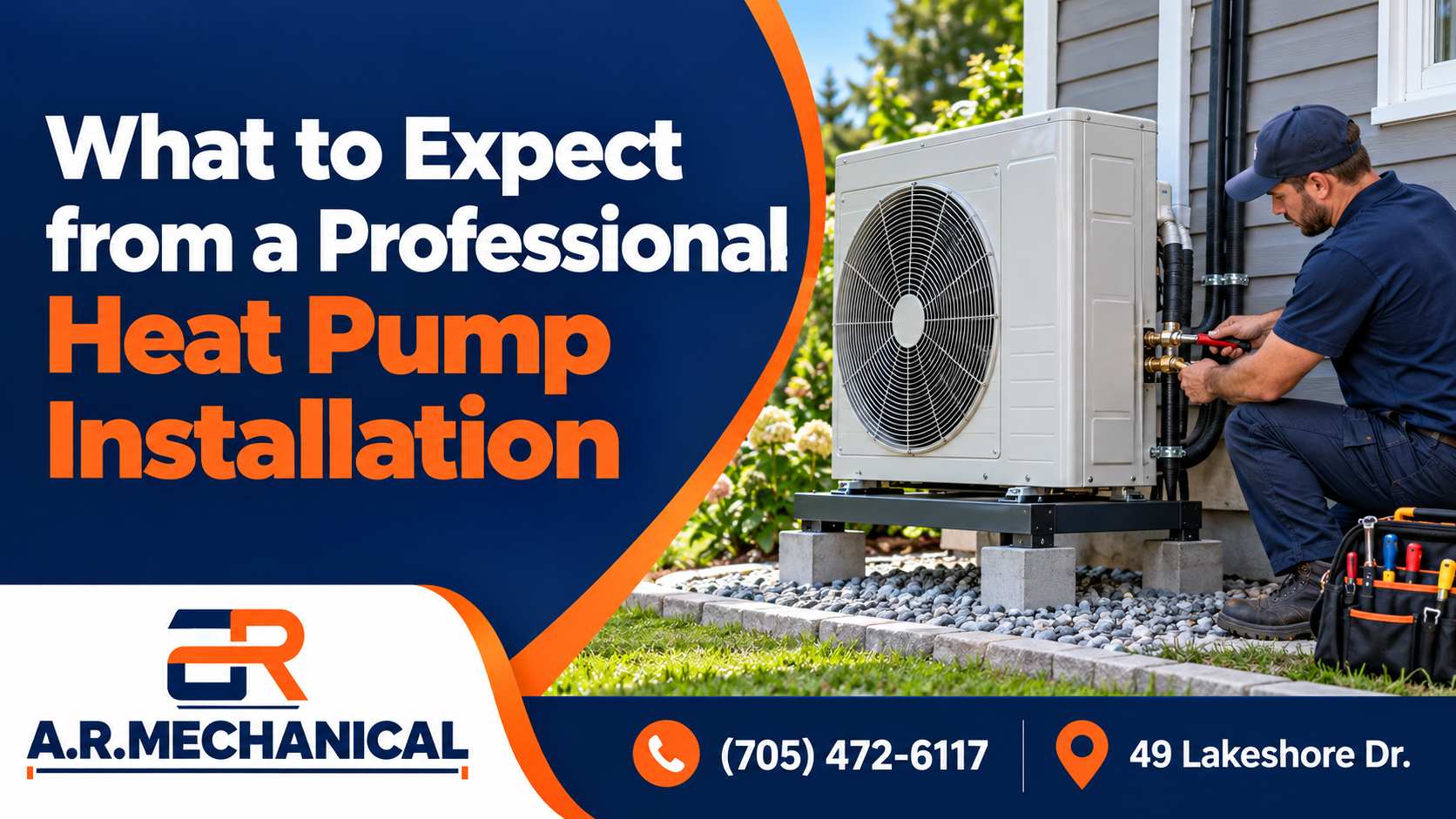
What to Expect from a Professional Heat Pump Installation
A new heat pump should heat and cool the house evenly, run efficiently in North Bay’s climate, and match the size of your home. That result depends on more than the equipment itself. A.R. Mechanical’s installation process covers the assessment, the equipment choice, the physical install, and the startup checks so the system performs the way it should from the first day. Here is what homeowners can expect.
The assessment visit
Before any equipment is ordered, a certified technician looks at the house and the existing system. This includes:
- Measuring the home and reviewing insulation, windows, and layout for a proper load calculation.
- Inspecting the current furnace, air conditioner, or heat pump, plus the ductwork or line sets.
- Checking electrical capacity, the location for the outdoor unit, and whether backup heat is already present.
- Discussing how you use the house, any rooms that have been hard to heat or cool, and your fuel options.
- Explaining whether a standard air-source heat pump, a cold-climate model, a dual-fuel setup with your existing furnace, or a ductless system is the best fit.
You receive a clear recommendation and a written quote. The goal is a system sized for your home and for local winter temperatures, not a unit chosen only because it matches the old equipment’s size.
Choosing the equipment
Once you approve the quote, A.R. Mechanical orders the heat pump and any matching indoor coil, air handler, or ductless heads. You will know the efficiency ratings, the cold-weather capacity, the warranty terms, and whether duct modifications, electrical upgrades, or a new thermostat are part of the job. If keeping your gas furnace as backup (dual fuel) makes sense, that configuration is confirmed at this stage.
Install day
On installation day the crew arrives with the equipment and protects floors and work areas. A typical air-source heat pump installation includes:
- Safe recovery of refrigerant from the old system and removal of the existing outdoor unit and indoor coil if they are being replaced.
- Setting the new outdoor unit on a level pad with proper clearances for airflow and defrost.
- Running or connecting refrigerant lines and making the electrical connections, including a new disconnect if required.
- Installing the indoor coil or air handler and connecting it to the ductwork.
- Setting up backup heat (electric strips or integration with an existing furnace) and confirming it stages correctly.
- Connecting the condensate drain and verifying flow.
- Installing or programming the thermostat for heat pump operation.
Most straightforward replacements are completed in one day. Jobs that include significant duct changes, a conversion from a furnace-and-air-conditioner setup, electrical upgrades, or multiple ductless heads can take longer. The crew confirms the timeline before work starts.
Startup and testing
After the equipment is in place, the technician:
- Evacuates the refrigerant lines to remove moisture and air.
- Charges the system to the manufacturer’s specifications.
- Tests both heating and cooling modes, including defrost operation where conditions allow.
- Measures temperatures, pressures, and electrical readings.
- Confirms the thermostat calls correctly and that backup heat engages when it should.
- Checks for unusual noises, vibrations, or leaks.
- Walks you through filter location, basic operation, and what to expect in the first few days of heating or cooling.
You receive the warranty paperwork and a summary of the work performed. The old equipment is removed from the site.
After the installation
The system should reach and hold the set temperature in both seasons without excessive short-cycling or constant runtime on normal days. In very cold weather, some use of backup heat is normal on most air-source systems. Change the filter on the recommended schedule, keep the outdoor unit clear of snow and debris, and schedule seasonal maintenance so the new heat pump stays efficient. If anything seems off in the first weeks, call. A.R. Mechanical stands behind the installation and will return to check it.
A professional install is the difference between a system that simply turns on and one that keeps the house comfortable through North Bay winters and summers. A.R. Mechanical’s team of 11 certified technicians handles heating, cooling, and plumbing for homes and businesses across the area. The shop is at 49 Lakeshore Drive. Call (705) 472-6117 to schedule a heat pump assessment or installation quote.