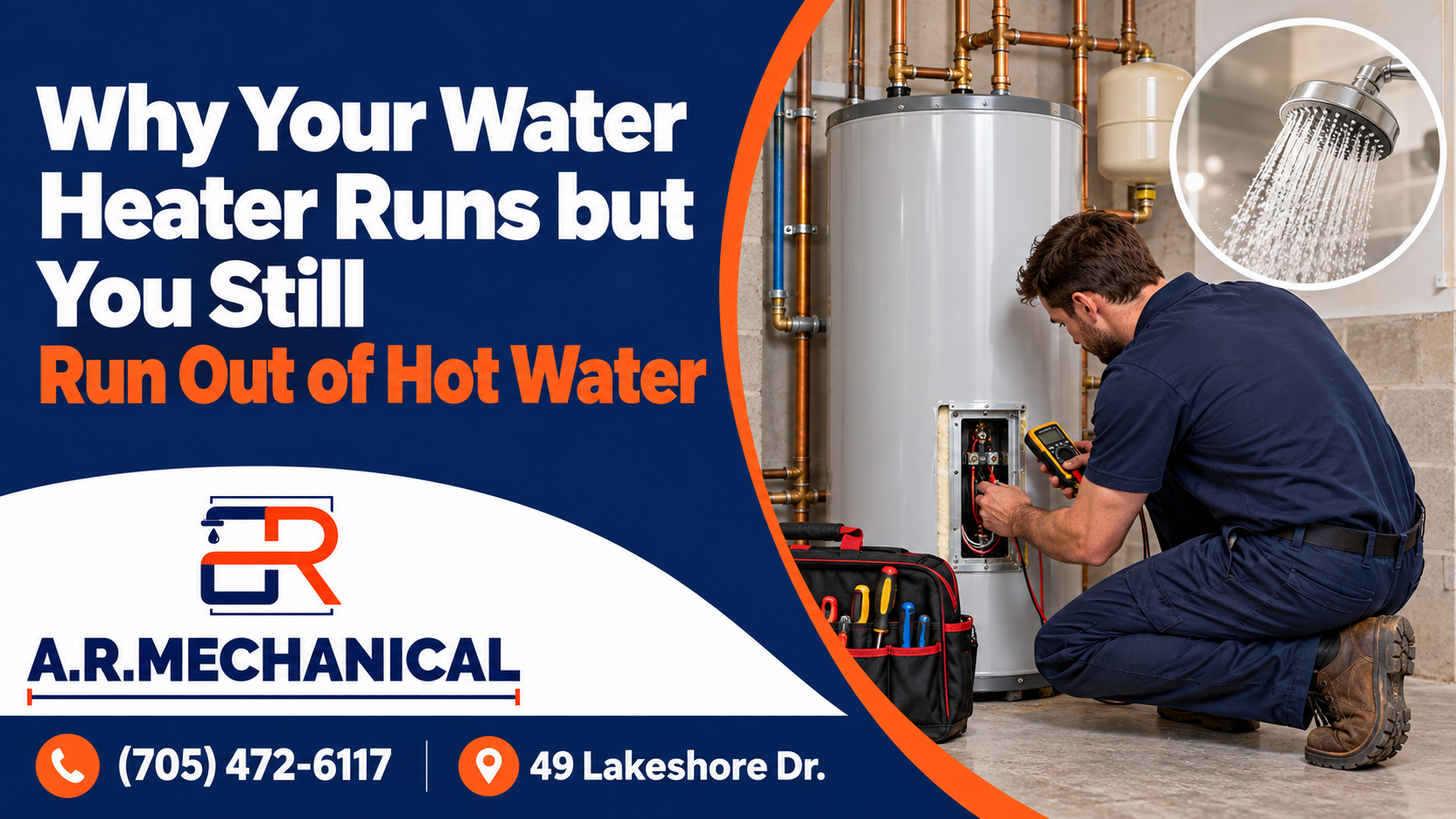
The water heater is on, you hear it firing or see the indicator, yet the hot water runs out partway through a shower or cannot keep up when two fixtures are used at once. This is a common complaint A.R. Mechanical diagnoses in North Bay homes. The unit is operating, but it is not delivering its full capacity or the hot water is being diluted. Here are the usual causes and what a technician checks.
Sediment buildup reducing effective capacity
Sediment on the bottom of a tank displaces water and insulates the heat source from the water. The tank holds less usable hot water and recovers more slowly. Flushing removes much of the sediment on units that are not heavily scaled. If the tank is older and heavily built up, replacement often restores reliable capacity more effectively than repeated flushing.
A broken or deteriorated dip tube
The dip tube carries incoming cold water to the bottom of the tank so it can be heated. When the tube cracks or breaks, cold water enters near the top and mixes with the hot water. You get lukewarm water or run out quickly even though the heater is running. Replacing the dip tube is a straightforward repair on most tanks.
One failed heating element (electric units)
Electric water heaters typically have two elements. If the lower element fails, the unit heats only the upper portion of the tank. You get some hot water, then it runs out quickly and recovers slowly. Testing and replacing the failed element usually solves it.
Thermostat set too low or failing
A thermostat set too low produces water that feels hot enough at first but does not provide a full usable volume at a comfortable temperature. A failing thermostat can cause the same symptom or prevent full heating. Adjusting or replacing the thermostat restores proper temperature.
Undersized tank for the household
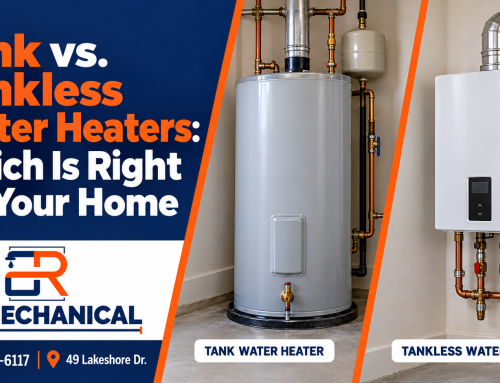
A 40-gallon tank that was adequate for two people often cannot keep up with a larger household or simultaneous uses. The heater runs correctly but simply does not store enough hot water. In this case the equipment is working as designed; the solution is a larger tank or a tankless unit sized for the actual demand.
Crossed connections or a failing mixing valve
In some homes a failed mixing valve, a crossed connection, or a fixture with a faulty anti-scald valve blends cold water into the hot line. The water heater produces hot water, but it is diluted before it reaches the tap. A technician can identify this by checking temperatures at the tank versus at the fixtures.
Tankless units that are scaled or undersized
On tankless water heaters, mineral scale restricts flow and heat transfer, so the unit cannot maintain temperature when demand is high. An undersized tankless unit does the same thing even when clean. Descaling restores performance on scaled units. Undersized units need to be replaced with a correctly sized model or supplemented.
What you can check before calling
- Confirm the thermostat is set to a normal hot-water temperature (typically around 120°F).
- Note whether you run out only during high demand or even with light use.
- Check whether the problem affects all fixtures or only some.
- Listen for rumbling that suggests heavy sediment.
- Recall the age and size of the unit.
If basic checks do not explain it, schedule service. Continuing to run out of hot water usually means a component has failed or the unit can no longer meet demand.
A.R. Mechanical’s certified technicians diagnose these issues and explain whether a repair will restore full hot water or whether the age and size of the unit make replacement the better option. The team serves homes across North Bay and the surrounding area from 49 Lakeshore Drive. Call (705) 472-6117 to book water heater diagnostics.