Hydronic heating is a reliable way to keep homes comfortable through Northern Ontario’s long, cold winters. Instead of blowing warm air through ducts, these systems heat water and circulate it through pipes to deliver steady, even warmth. Many North Bay-area homes use hydronic systems with boilers, baseboards, radiators, or in-floor radiant tubing.
Here’s a clear look at how hydronic heating works and why it performs well in this climate.
The Basic Process
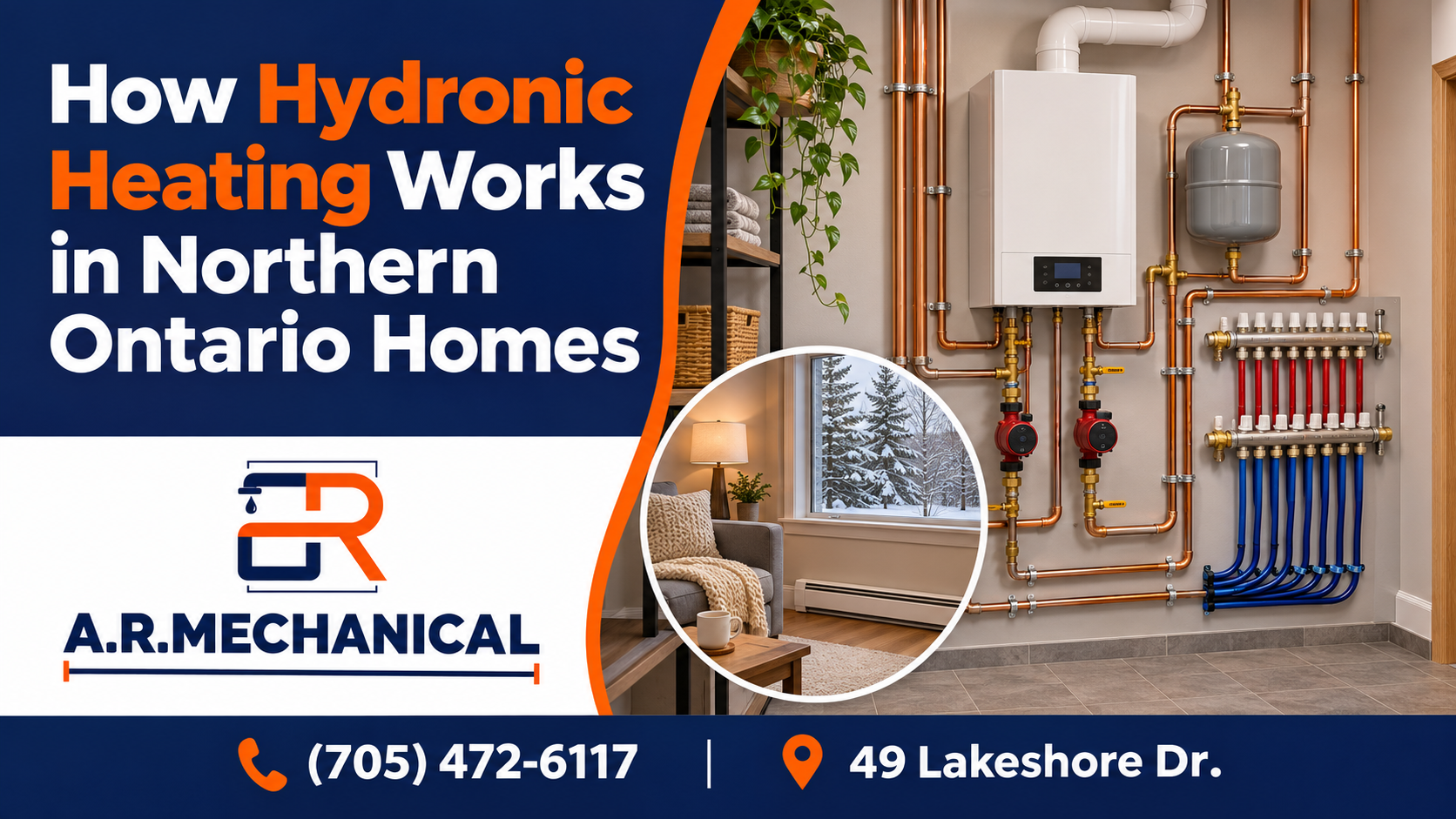
A hydronic system has a few main parts that work together:
- The boiler heats water using natural gas, propane, or electricity.
- Circulator pumps move the heated water through a closed loop of pipes.
- Distribution units (baseboards, radiators, or radiant floor tubing) release the heat into living spaces.
- Controls and zones manage temperature and can heat different areas of the home independently.
- Return piping brings the cooler water back to the boiler to be reheated.
The water stays inside the sealed system. It doesn’t get used as domestic hot water (unless you have a combination boiler). The continuous circulation keeps rooms at a steady temperature without the on-and-off blasting common in some forced-air systems.
Why Hydronic Heating Suits Northern Ontario
North Bay and the surrounding region see extended heating seasons and frequent sub-zero temperatures. Hydronic systems handle these conditions well for several reasons:
- Even heat — Warmth radiates from baseboards or floors rather than blowing from vents, which reduces drafts and cold spots.
- Quiet operation — No blower motor running during heating cycles.
- Zoning — Different floors or rooms can often be controlled separately, which helps in larger or multi-level homes.
- Comfort at lower air temperatures — Because the heat is more consistent, many people feel comfortable with the thermostat set a degree or two lower than with forced air.
- Durability — Well-maintained boilers and piping can last 15–20 years or more.
Radiant floor systems are especially popular in renovations and new builds because they heat from the ground up and pair well with modern high-efficiency boilers.
Common Types of Hydronic Distribution
- Baseboard radiators — The most common style in existing Northern Ontario homes. Hot water flows through finned tubes behind a cover along exterior walls.
- Panel or column radiators — Used in some older homes or style-conscious renovations.
- In-floor radiant tubing — Plastic tubing embedded in concrete or under flooring. It provides very even heat and is often installed during major renovations or new construction.
- Combination systems — Some homes use a mix (for example, radiant floors on the main level and baseboards upstairs).
Key Components You’ll See
- Boiler (the heat source)
- Circulator pumps
- Zone valves or zone circulators
- Expansion tank
- Air eliminator / air vents
- Pressure-reducing valve and backflow preventer
- Thermostats and controls
Proper installation and regular maintenance keep these parts working together efficiently. Air in the system, failing circulators, or sediment buildup are among the more common issues that affect performance.
Maintenance Tips for Northern Ontario Homes
Because heating runs for many months, a little attention goes a long way:
- Schedule an annual boiler inspection before the heating season.
- Watch for leaks, unusual noises, or uneven heat between zones.
- Keep the area around the boiler clear.
- Consider a maintenance membership so seasonal checks happen automatically.
If your system is older and you’re seeing frequent repairs, rising fuel use, or inconsistent heat, it may be time to evaluate a high-efficiency boiler replacement.
Is Hydronic Heating Right for Your Home?
Hydronic systems work especially well in homes that already have the piping in place, in renovations where radiant floors are being added, and in buildings where quiet, even heat is a priority. They’re also a strong option when replacing an aging boiler.
Every home is different. Factors such as insulation, window quality, existing distribution type, and fuel source all influence performance and operating cost.
Need help with a hydronic system in the North Bay area?
AR Mechanical provides boiler repair, maintenance, and installation for homes and buildings across North Bay and surrounding communities. Call (705) 472-6117 or email admin@ar-mechanical.ca to discuss your system.