When a water heater fails or you are planning an upgrade, the choice usually comes down to a traditional tank or a tankless unit. Both supply reliable hot water when they are sized and installed correctly. The better option depends on your household’s usage, available space, fuel type, and budget. A.R. Mechanical installs and services both for North Bay homes and can recommend the right fit after reviewing your setup. Here is how they compare.
How tank water heaters work
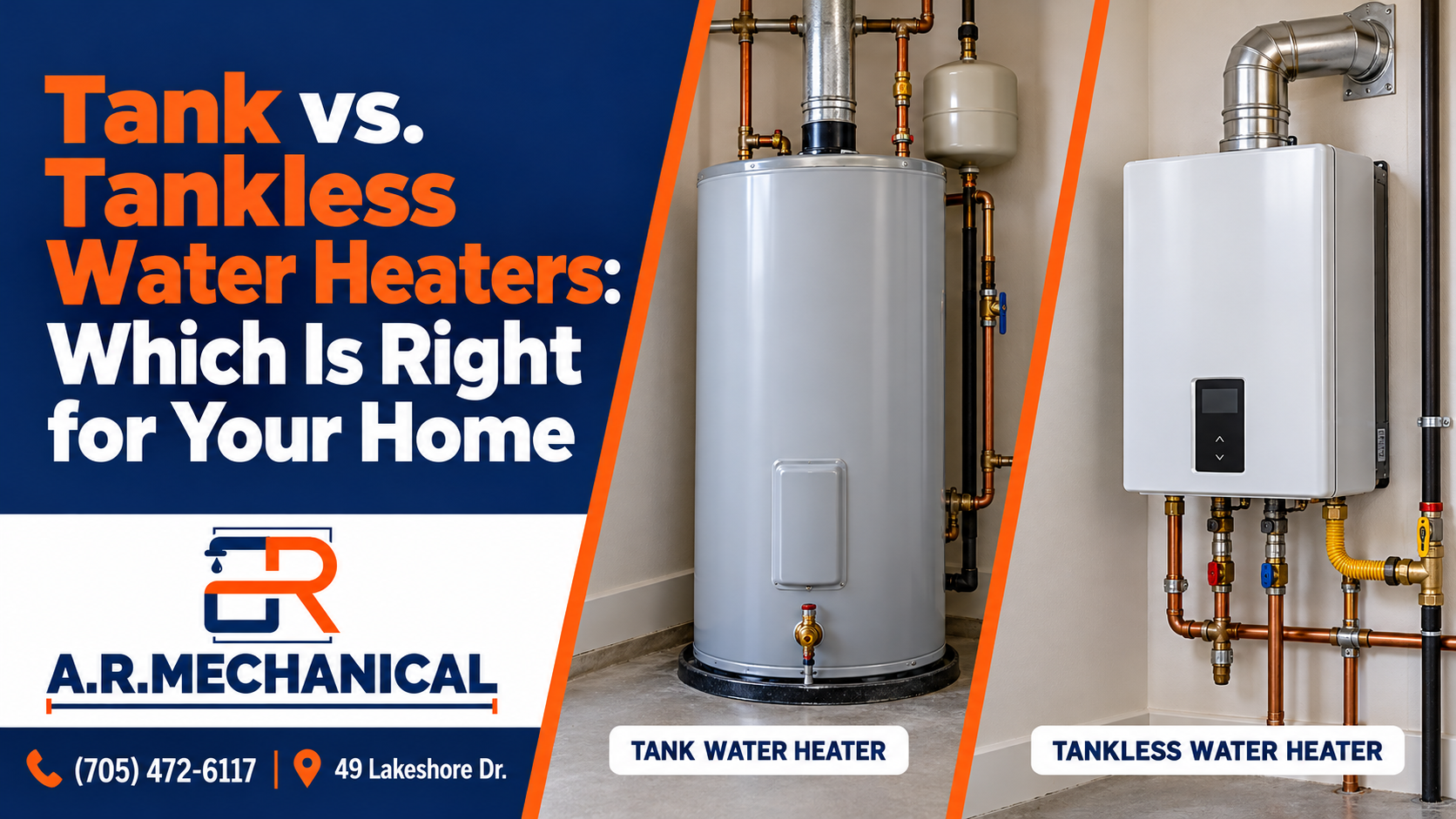
A tank water heater stores 40 to 60 gallons or more of hot water and keeps it heated until you need it. When you open a tap, hot water is drawn from the top of the tank and cold water enters at the bottom to be heated. Gas and electric models are common.
Tank units are often the straightforward choice when:
- Your household has moderate hot water demand that fits within the tank’s capacity.
- You want the lowest upfront cost.
- The existing space, venting, and electrical or gas supply already suit a tank.
- You prefer simple, widely understood equipment with lower installation complexity.
The limitation is capacity. Once the stored hot water is used, you wait for the tank to recover. Larger households or homes with multiple simultaneous uses can run out.
How tankless water heaters work
A tankless (on-demand) water heater heats water only when a tap is opened. Cold water passes through a heat exchanger and is delivered hot, with no storage tank. Gas tankless units are most common for whole-home use; electric tankless units work for smaller demands or point-of-use applications.
Tankless units are often the better fit when:
- You want continuous hot water for long showers or multiple uses without running out.
- Space is limited and you prefer a wall-mounted unit over a large tank.
- You like the idea of heating water only when it is needed, which can lower energy use in many households.
- You are already upgrading gas lines or electrical service and can accommodate the unit’s requirements.
- You plan to stay in the home long enough to benefit from the longer typical lifespan.
Tankless systems require proper sizing. An undersized unit can struggle when several fixtures run at once. They also need adequate gas supply or electrical capacity and, for gas models, correct venting.
Side-by-side comparison
| Factor | Tank water heater | Tankless water heater |
|---|---|---|
| Hot water supply | Limited to tank size, then recovery time | Continuous (when properly sized) |
| Upfront cost | Lower | Higher |
| Energy use | Standby heat loss | Heats only on demand |
| Lifespan | Typically 8–12 years | Often 15–20+ years with maintenance |
| Space | Floor space for tank | Wall-mounted, compact |
| Installation | Usually simpler replacement | May need gas line, venting, or electrical upgrades |
| Maintenance | Occasional flushing, anode rod | Regular descaling, especially in harder water |
| Best for | Average households, lower budget | High demand, limited space, long-term ownership |
Operating cost and comfort
Tankless units avoid the standby losses of keeping a tank hot all day, so many households see lower energy use. The savings vary with how much hot water you actually consume. Comfort-wise, a correctly sized tankless system provides endless hot water. A correctly sized tank provides plenty for normal use and costs less to install. Households that regularly run out of hot water with a tank often prefer tankless once they experience continuous supply.
Which A.R. Mechanical usually recommends
- Choose a tank when you want a direct, lower-cost replacement and your current usage fits the tank size.
- Choose tankless when you have run out of hot water with a tank, want continuous supply, have limited space, or are planning to stay in the home long term and can accommodate the installation requirements.
- Size either system to your peak demand. A technician can calculate fixture use and recommend the right capacity so you are not disappointed after installation.
A.R. Mechanical’s certified technicians assess your current water heater, fuel type, venting, and household needs before recommending equipment. You get a clear explanation of the trade-offs and a quote for the option that fits.
The team of 11 serves homes across North Bay and the surrounding area from 49 Lakeshore Drive. Call (705) 472-6117 to discuss a tank or tankless water heater for your home.