How Planned Maintenance Prevents Costly Industrial HVAC Downtime
Unplanned HVAC failures in a plant, warehouse, or production facility cost more than the repair. Lost output, idle staff, rushed parts, and after-hours labor add up quickly. Planned maintenance moves those problems to a scheduled window when they are cheaper and less disruptive to fix. A.R. Mechanical’s certified technicians see the same preventable failures across North Bay industrial sites. Here is what a proper maintenance program actually stops.
Dirt, belts, and restricted airflow
Dust on coils and clogged filters force fans and compressors to work harder. Worn or loose belts reduce airflow and can snap under load. Both conditions lead to overheating, frozen coils, higher energy use, and eventual motor or compressor failure. Cleaning coils, replacing filters, and checking belts on a schedule removes these risks before they cause a shutdown.
Electrical components that fail under load
Contactors, capacitors, and connections degrade gradually. They often still function during light operation, then fail when the equipment runs long hours in extreme temperatures. Testing and tightening these components during planned visits lets you replace a relatively low-cost part instead of facing an emergency compressor or fan motor failure.
Refrigerant leaks that reduce capacity
Slow refrigerant loss may not stop a unit on a mild day. Once the facility is under full heating or cooling load, capacity drops and continued operation can damage the compressor. Regular pressure and temperature checks find low charge early. Repairing a small leak and recharging is far less expensive than replacing a major component after it has run dry.
Condensate and drainage problems
Clogged drains and dirty pans cause water backups that trip safety switches and shut equipment down. In some cases they create slip hazards or damage ceilings and product below rooftop units. Clearing drains and inspecting pans during maintenance is one of the simplest ways to avoid an unexpected outage.
Worn bearings, motors, and mechanical parts
Bearings and motors give warning signs—noise, vibration, rising amp draw—long before they seize. Planned inspections catch these signs while the parts can still be ordered and replaced on your schedule instead of in the middle of a production run.
Control and sensor drift
Sensors and controls that drift out of calibration cause equipment to short-cycle, run constantly, or ignore setpoints. The result is higher energy use and accelerated wear. Verifying controls during maintenance keeps the system protecting the space the way it was designed to.
What planned industrial HVAC maintenance typically includes
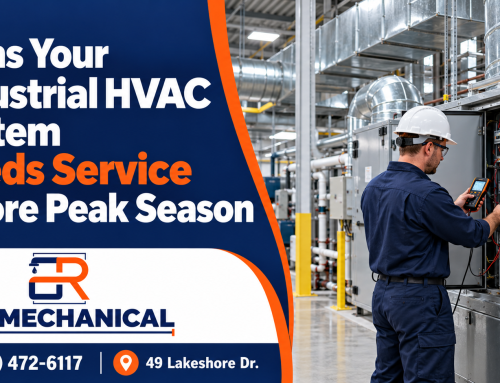
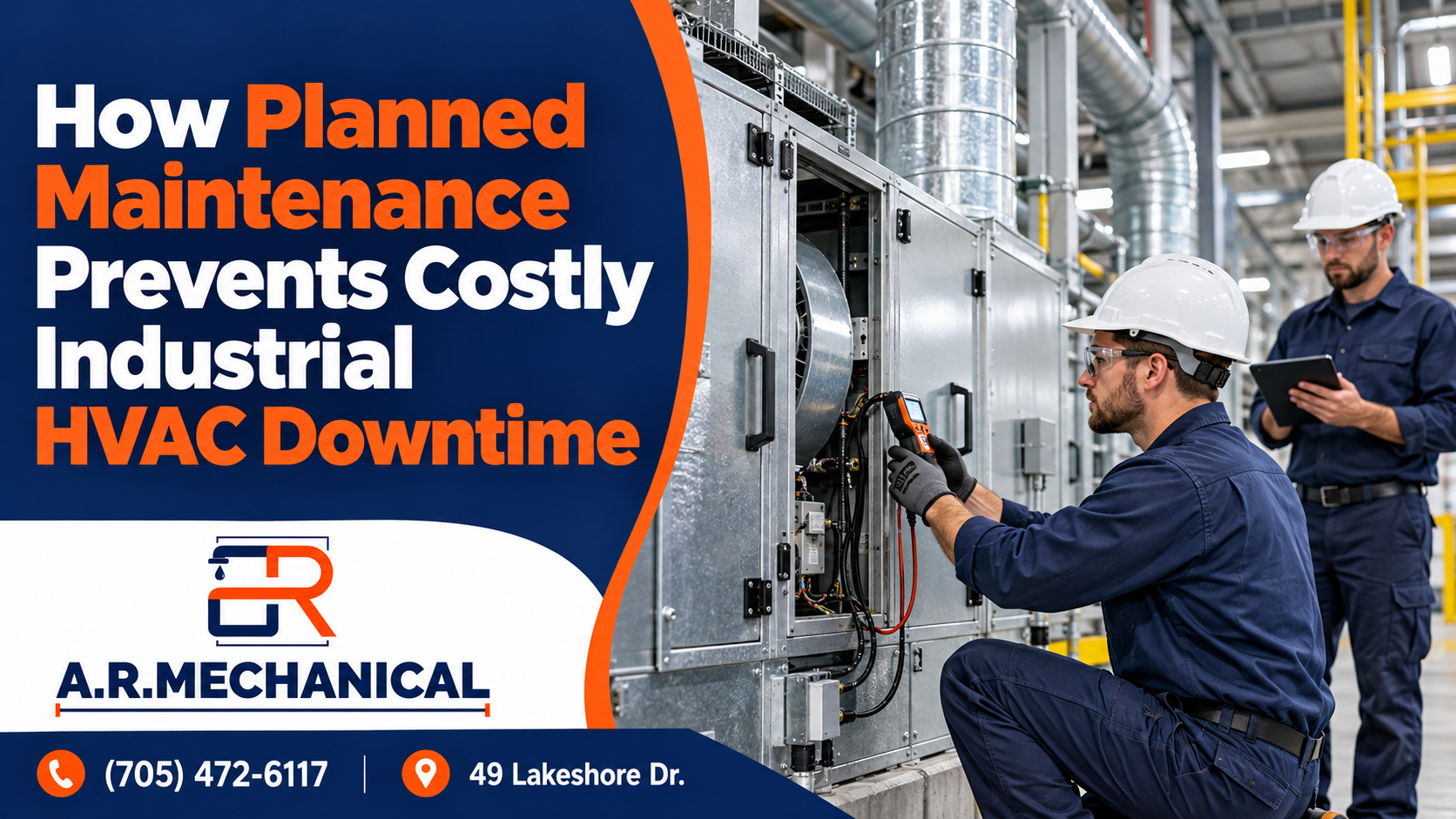
A typical A.R. Mechanical maintenance visit covers:
- Filter replacement or cleaning
- Belt inspection and adjustment
- Coil cleaning
- Fan motor, blower, and bearing checks
- Electrical connection, contactor, and capacitor testing
- Refrigerant pressure checks where applicable
- Condensate drain and pan service
- Control and sensor verification
- Overall operational test and written findings
The exact list is matched to your equipment and how hard it runs. Facilities with continuous operation usually benefit from more frequent visits than seasonal sites.
The cost difference
A scheduled maintenance contract is a predictable operating expense. An emergency failure often includes overtime rates, expedited parts, temporary cooling or heating rentals, and lost production. On older equipment, the same neglected issues that maintenance would have caught can push repair costs high enough that replacement becomes the only practical option—on the worst possible timeline.
When to set it up
The best time to start planned maintenance is before your next known peak season or high-production period. If equipment is already showing noise, uneven temperatures, or rising energy use, schedule an initial inspection now. A.R. Mechanical can recommend a visit frequency based on equipment age, runtime, and criticality.
A.R. Mechanical serves commercial and industrial clients across North Bay and the surrounding area with heating, cooling, and ventilation. The team of 11 certified technicians is based at 49 Lakeshore Drive. Call (705) 472-6117 to set up planned industrial HVAC maintenance.