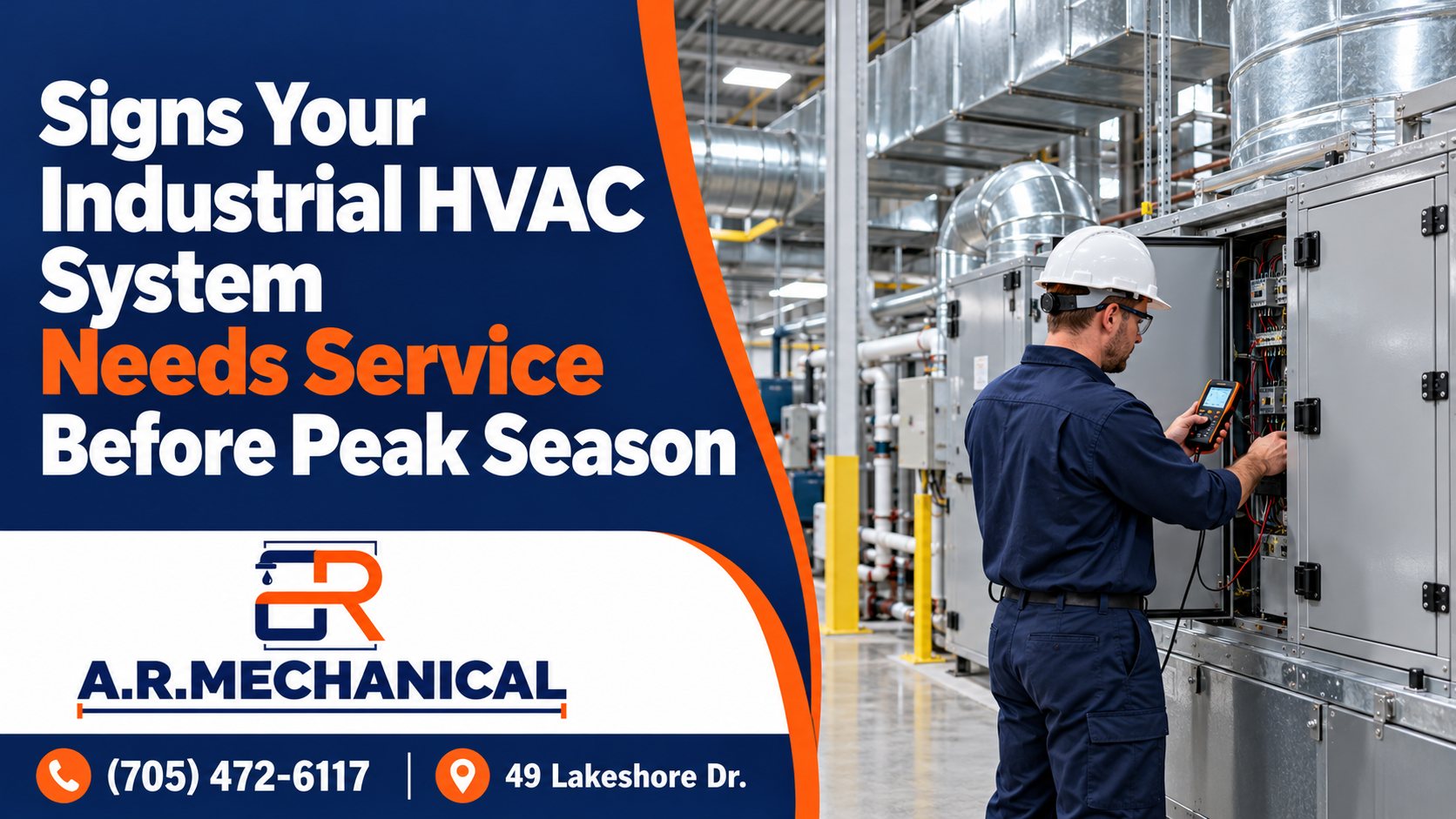
Signs Your Industrial HVAC System Needs Service Before Peak Season
Industrial and commercial HVAC equipment in North Bay works hardest when production schedules are full and outdoor temperatures are extreme. Problems that are minor in the shoulder seasons become shutdowns in January or July. A planned service visit before peak season catches the issues that turn into emergency calls later. A.R. Mechanical’s certified technicians see the same warning signs every year. Here is what facility managers should watch for.
Uneven temperatures or weak airflow across the space
The system runs, but some zones stay too warm or too cool, or airflow at the diffusers feels weaker than it used to. This often points to dirty coils, slipping belts, failing fan motors, restricted filters, or duct problems. Waiting until the equipment is under full load usually makes the repair more urgent and more disruptive.
Unusual noises or vibrations
Grinding, squealing, rattling, or new vibration from a rooftop unit, make-up air system, or air handler are not normal. Worn bearings, loose components, failing motors, or debris in the unit can all cause them. Early service stops a small noise from becoming a seized motor or damaged blower during your busiest period.
Rising energy use with the same production schedule
If heating or cooling costs have climbed even though operating hours and loads have not changed, the equipment is likely working harder than it should. Dirty coils, low refrigerant, worn belts, or failing compressors all increase energy consumption. A pre-season inspection often restores efficiency before the high-use months.
Frequent short-cycling or constant runtime
Equipment that starts and stops every few minutes, or that never seems to satisfy, is usually struggling with airflow, refrigerant charge, controls, or sizing relative to the actual load. Both patterns accelerate wear and raise the chance of a mid-season failure.
Ice, excessive frost, or defrost issues
Ice on coils or refrigerant lines, or a system that seems stuck in defrost, usually indicates airflow restrictions, low refrigerant, or control problems. Running the equipment in this condition can damage compressors. Shut it down and schedule service before peak heating or cooling demand.
Visible leaks, water, or unusual odors
Condensate overflows, refrigerant oil stains, or burning smells signal problems that will not improve on their own. A clogged drain can shut a unit down on a safety switch. Electrical smells can indicate failing components. These are reasons to call before the issue forces an unplanned outage.
Controls or sensors acting inconsistently
Thermostats, building controls, or sensors that do not match actual space conditions, or that cause the system to ignore setpoints, often point to calibration, wiring, or board issues. Correcting them in advance prevents the equipment from running inefficiently or failing to protect the space when you need it most.
What a pre-peak-season service visit includes
A typical A.R. Mechanical industrial HVAC inspection covers:
- Filter and belt condition
- Coil cleanliness and airflow checks
- Fan motor and bearing inspection
- Electrical connections, capacitors, and contactors
- Refrigerant pressures where applicable
- Condensate drain and pan condition
- Control and sensor operation
- Overall heating or cooling performance test
Most of these items take less time and cost less when addressed before the system is under continuous heavy load.
When to schedule
Book service in the weeks before your known peak heating or cooling period, or before a high-production stretch. If the equipment is more than 10–12 years old, has needed repairs in the past year, or showed any of the signs above, mention that when you call. The technician can tell you whether maintenance is enough or whether it is time to plan a replacement.
A.R. Mechanical serves commercial and industrial clients across North Bay and the surrounding area with heating, cooling, and ventilation. The team of 11 certified technicians is based at 49 Lakeshore Drive. Call (705) 472-6117 to schedule industrial HVAC service before peak season.